
Arkansas Sex Offender Registry
The Arkansas sex offender registry is a public database you can search by name, address, zip code, or county. The Arkansas Crime Information Center, known as ACIC, runs the registry and keeps it updated across all 75 counties. You can look up any Level 3 or Level 4 sex offender through the state's online search tool. Each record shows the person's current address, photo, and conviction details. This page covers how the registry works in Arkansas, who must register, what the risk levels mean, and how to find registered sex offenders in any county or city.
Arkansas Sex Offender Registry at a Glance
How to Search the Arkansas Sex Offender Registry
The free public search tool is run by ACIC and is available at ark.org/offender-search. You can search by last name, first name, city, county, or zip code. Results show the person's current home address, a recent photo, and details about the offense that required registration. You can also narrow results to a single county if you want to check a specific area.
Only Level 3 and Level 4 sex offenders appear on the public website. Level 1 and Level 2 registrants are not shown to the general public, though law enforcement has full access. If a name does not come up in the search, that person may be registered at a lower risk level, may not live in Arkansas, or may no longer be required to register. The public tool does not show every registered sex offender in the state.
In 2022, Mainstream Technologies partnered with ACIC to rebuild and significantly improve the Arkansas sex offender registry system, adding faster location updates and better search options for both the public and law enforcement agencies.

The rebuilt system also gives law enforcement on-demand reporting tools, helping officers confirm compliance faster and with less paperwork.
Who Must Register as an Arkansas Sex Offender
Adults convicted of qualifying sex offenses must register. So must persons found not guilty by reason of mental disease or defect, and those already on probation or parole for a sex offense as of August 1, 1997. Out-of-state offenders who move to Arkansas, or who work or attend school here, must also register regardless of whether they live in the state.
The Arkansas Sex Offender Registration Act, codified at Ark. Code Ann. § 12-12-901 et seq., sets out the full list of crimes that require registration. Target offenses include rape under § 5-14-103, sexual assault in the first through fourth degrees under §§ 5-14-124 through 5-14-127, sexual indecency with a child under § 5-14-110, computer child pornography under § 5-27-603, and internet stalking of a child under § 5-27-306. Kidnapping of a minor not by a parent and video voyeurism as a felony also trigger registration. The complete list covers more than fifteen specific offenses.
Nonresident workers and students must register too. Work or attend school in Arkansas for more than fourteen consecutive days, or thirty total days in a year, and registration is required. You register with law enforcement in the county where your job or school is located. Residency in Arkansas is not a factor. The law applies to anyone physically present for work or school.
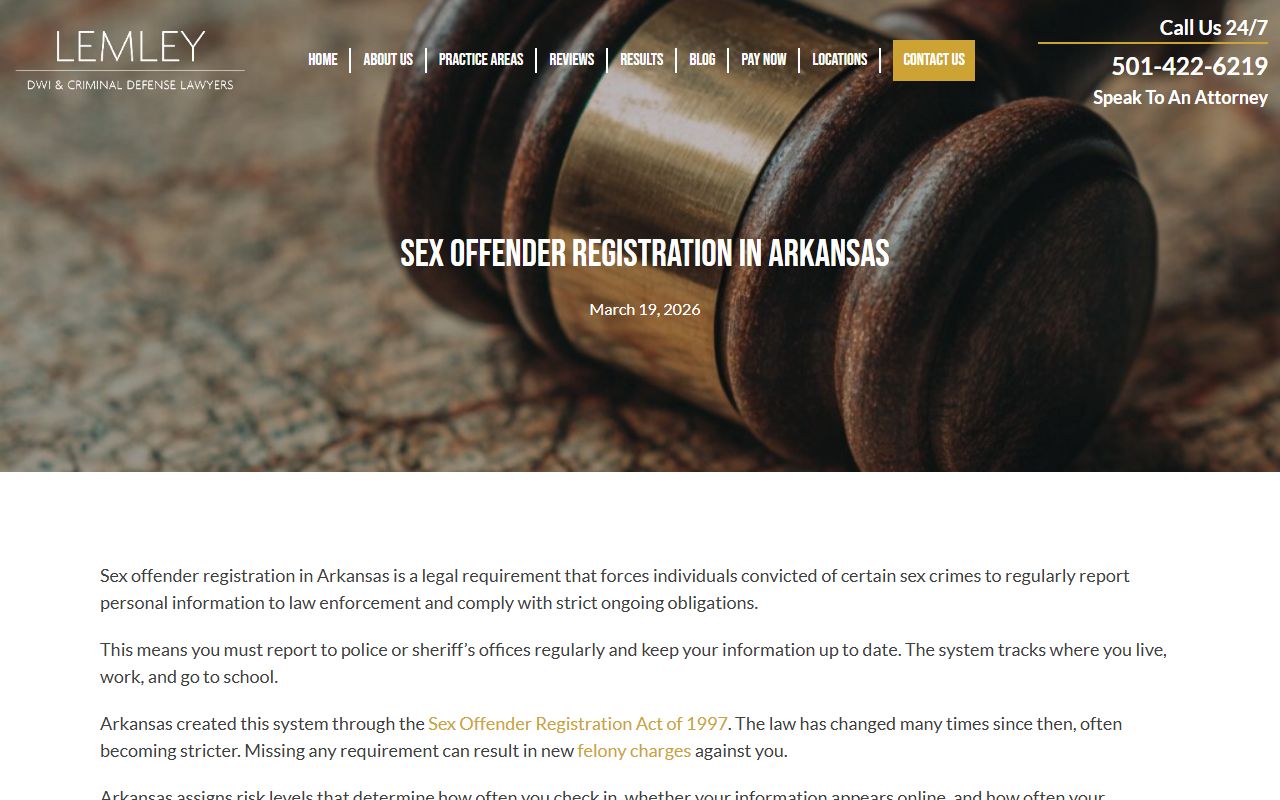
A detailed legal overview of Arkansas registration requirements covers the exact documents needed at first registration: valid ID, proof of residence, court sentencing papers, work or school information, vehicle details, and every online account and screen name the offender uses.
Contacting the local sheriff's office before arriving to register is strongly recommended. Offices have specific hours for registration appointments and miss rates are not tolerated.
Arkansas Sex Offender Risk Levels
Every registered sex offender in Arkansas is assigned one of four risk levels. The Sex Offender Screening and Risk Assessment unit, called SOSRA, conducts the interviews and reviews criminal history to set each person's level. SOSRA is at 2403 E. Harding Ave. in Pine Bluff and can be reached at (870) 850-8429. The assigned level determines how often someone must check in and how widely the community is notified.
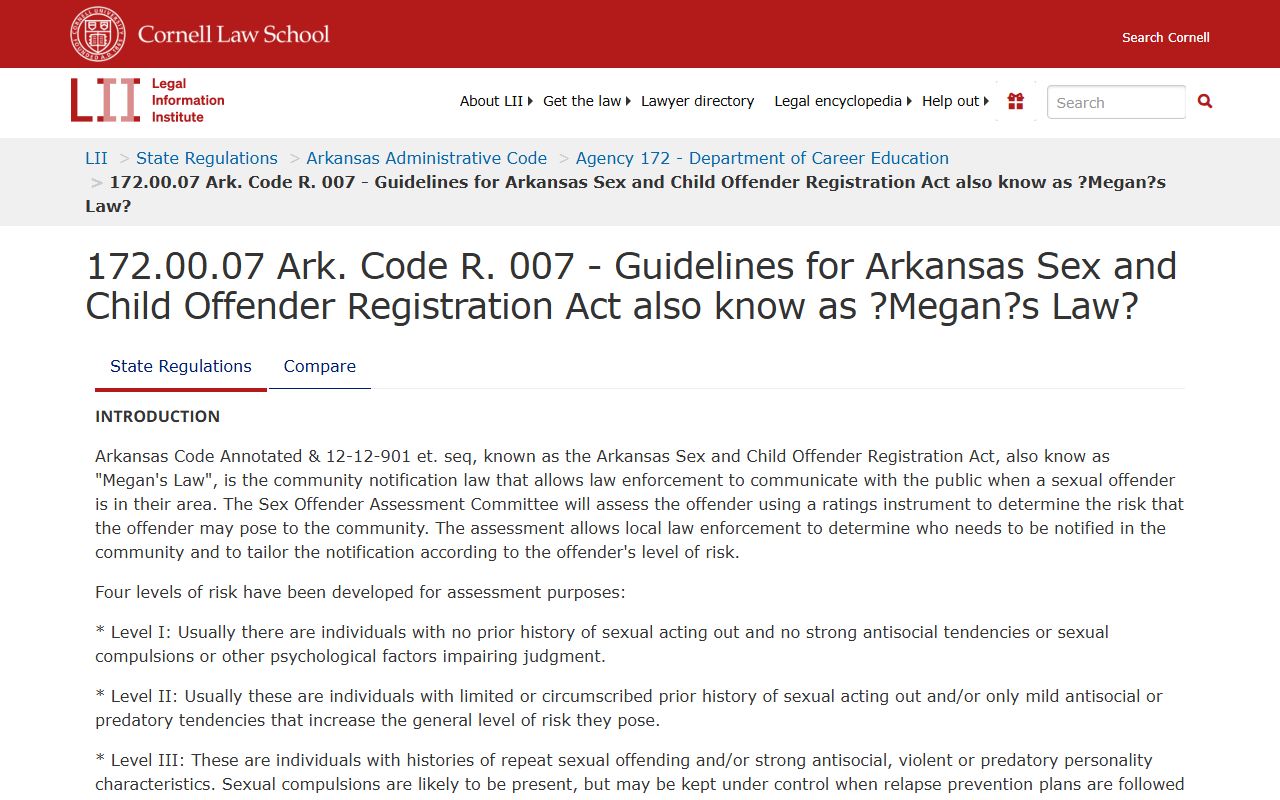
Arkansas law defines each risk tier in detail under the community notification regulations, part of the state's implementation of Megan's Law. Level 1 offenders are low risk. They have no prior history of sexual offending and show no strong antisocial tendencies. Their information stays off the public website. Level 2 offenders have a limited prior history and mild tendencies. Law enforcement has discretion about notifying schools and nearby groups.
Level 3 offenders are high risk with repeat histories or strong predatory traits. Notification for Level 3 includes door-to-door visits to neighbors, printed fact sheets, and direct contact with local schools. Level 4 offenders are sexually violent predators. For this group, community meetings can be held, media alerts may be issued, and public posters may be used. Any offender who skips their SOSRA interview or refuses to cooperate is automatically assigned Level 3 or referred for Level 4 review.
Offenders can request a reassessment after five years, but the cost falls on them and a polygraph or voice stress analysis is part of the process.
Arkansas Sex Offender Registration Requirements
The information required at registration is extensive. Offenders must provide their full name and all aliases, date of birth, Social Security number, driver's license number, current address, place of work, and school information. A photo is taken at every visit. Fingerprints and a DNA sample are collected. All vehicle details, including make, model, color, and license plate, must be on file.
Every registered sex offender must also report all online accounts: every email address, every username, every screen name. If any piece of information changes, the offender must notify both ACIC and local law enforcement ten days before the change happens. For emergency changes caused by fire or natural disaster, the window is three days. Moving without giving proper notice is itself a felony.
Check-in schedules are set by risk level. Level 1, 2, and 3 offenders must appear in person every six months at the law enforcement agency where they are registered. Level 4 sexually violent predators must appear every three months. These visits are not optional. Skipping one counts as a violation. Homeless sex offenders must still register and typically check in more frequently to verify location.
ACIC can be reached at One Capitol Mall, Room 4D-200, Little Rock, AR 72201. Phone: (501) 682-2222.
Sex Offender Residency Restrictions in Arkansas
Level 3 and Level 4 sex offenders cannot live within 2,000 feet of any public or private elementary school, secondary school, or daycare facility. The Arkansas General Assembly enacted this restriction in 2003. The measurement runs from the property line of the school or daycare center. It applies statewide to all Level 3 and Level 4 offenders living in Arkansas.
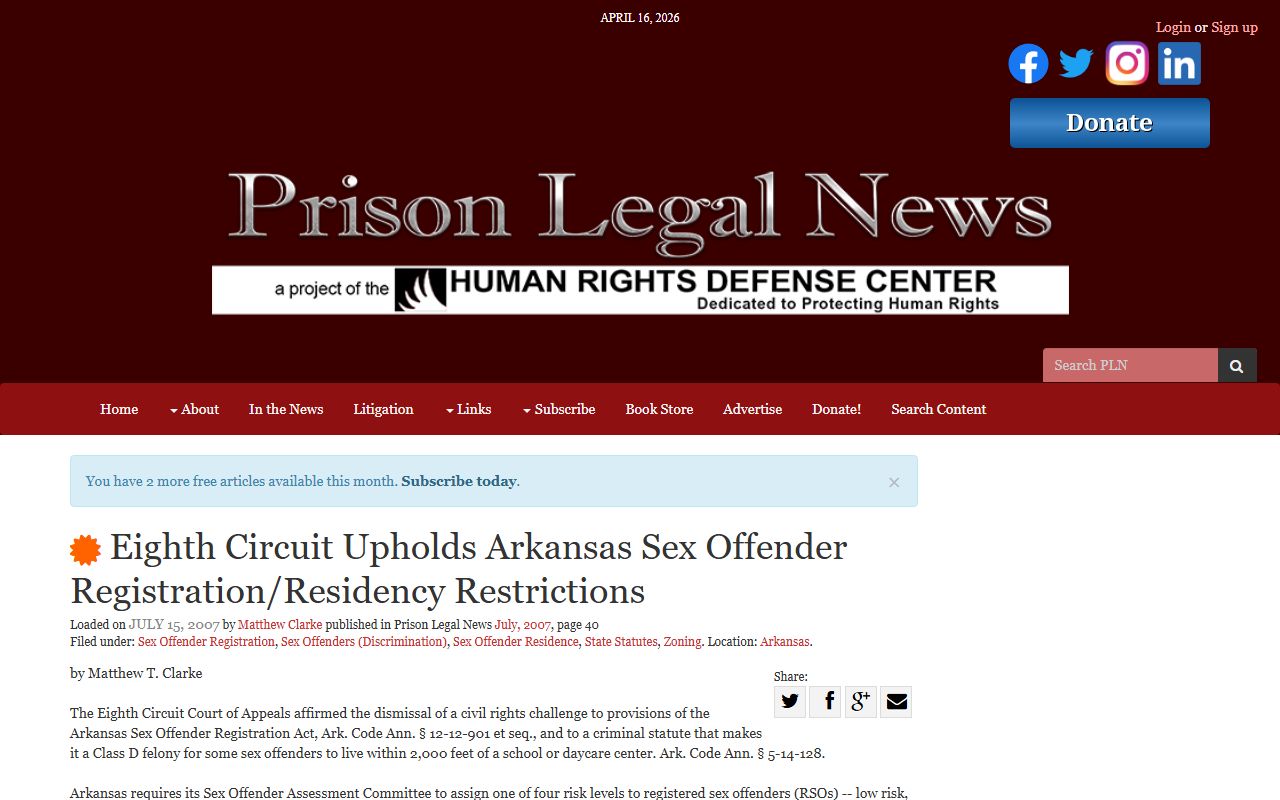
The Eighth Circuit Court of Appeals upheld Arkansas's residency restriction in Weems v. Little Rock Police Department, ruling that the law did not violate any fundamental constitutional right. The court found that protecting public safety outweighs the residential preferences of sex offenders assigned to the highest risk tiers.
A narrow exception exists for offenders who owned and occupied a home before the school or daycare opened, or before July 16, 2003. But this exception disappears the moment an offender commits another sexual offense after that date. The exception protects only the original location. Knowingly violating the residency restriction is a Class D felony. Level 1 and Level 2 offenders are not subject to this rule.
Note: Level 3 and Level 4 sex offenders in Arkansas must stay at least 2,000 feet from any school or daycare property. Violating this rule is a Class D felony under Arkansas law.
Penalties for Failing to Register in Arkansas
Failing to register as required is a Class C felony. That carries three to ten years in prison and a fine up to $10,000. Common violations include missing registration deadlines, skipping verification appointments, moving without giving ten days' notice, and providing false information at registration. Each separate failure can be charged as its own offense.
Three convictions for failure to register trigger automatic lifetime registration. There is no petition available after three failures. The law treats repeat non-compliance as a serious, ongoing public safety issue.
VictimLaw's Arkansas registry entry explains what information is accessible to law enforcement versus what the public can see on the registry website, including the Offender Fact Sheet used by law enforcement during investigations and community notifications.
Offenders who skip their SOSRA risk assessment interview or refuse to cooperate are assigned a default Level 3, or referred for Level 4 consideration. Avoiding assessment does not avoid a risk classification. It typically makes it worse.
Removing a Name from the Arkansas Sex Offender Registry
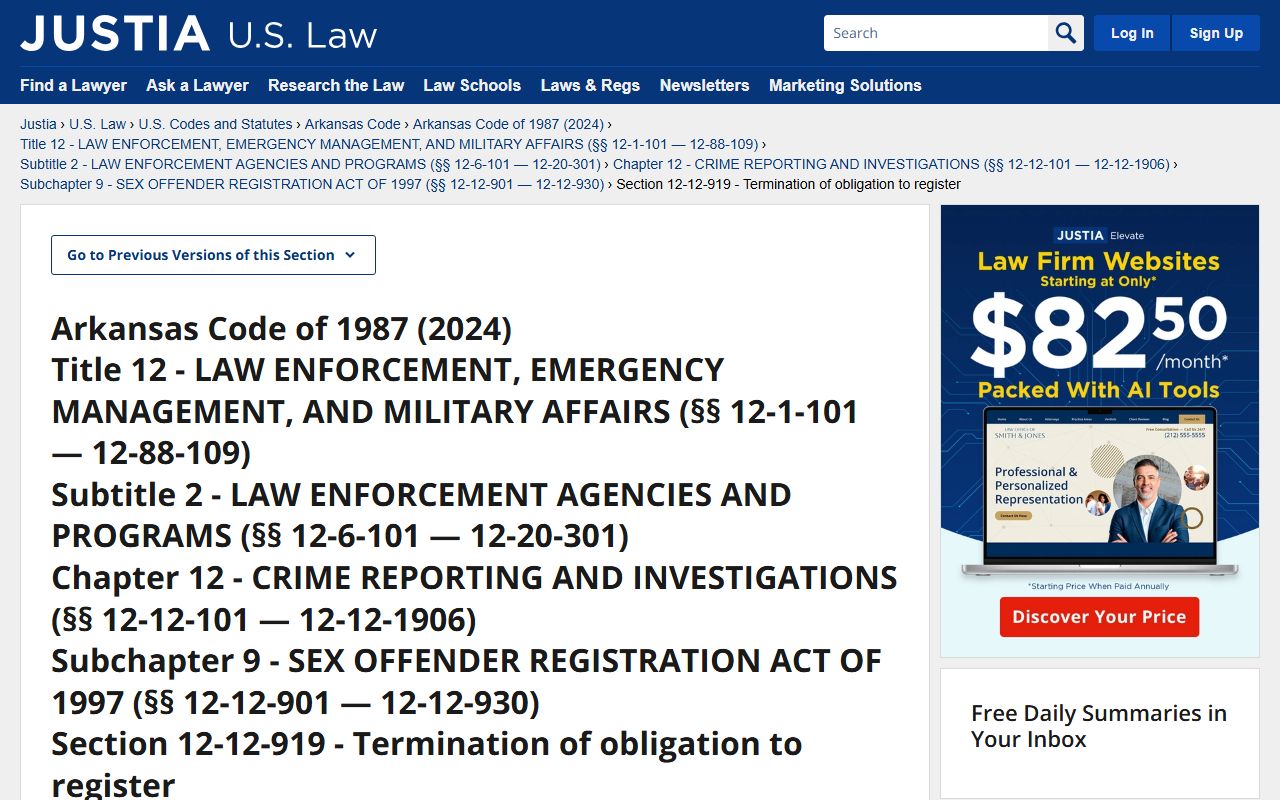
Some registrants can petition for removal after meeting strict requirements. Under Ark. Code Ann. § 12-12-919, a person may apply after fifteen years from release from prison or from the start of parole or probation. The court must find the applicant has not been convicted of any additional sex offense during that period and does not pose a threat to public safety.
The petition process requires filing in the original court and serving copies on the prosecuting attorney, the ACIC Sex Offender Registry, and the Community Notification Assessment unit at least thirty days before the hearing. The court notifies VINE, the computerized victim notification system, and victims who opted in can attend and speak at the hearing. If the court denies the petition, the offender must wait three more years before trying again.
Certain offenses carry lifetime registration with no petition option. Sexually violent predators and those with multiple qualifying convictions may have no pathway to removal, regardless of time served or behavior after release.
The CENSOR System and How Arkansas Manages the Registry
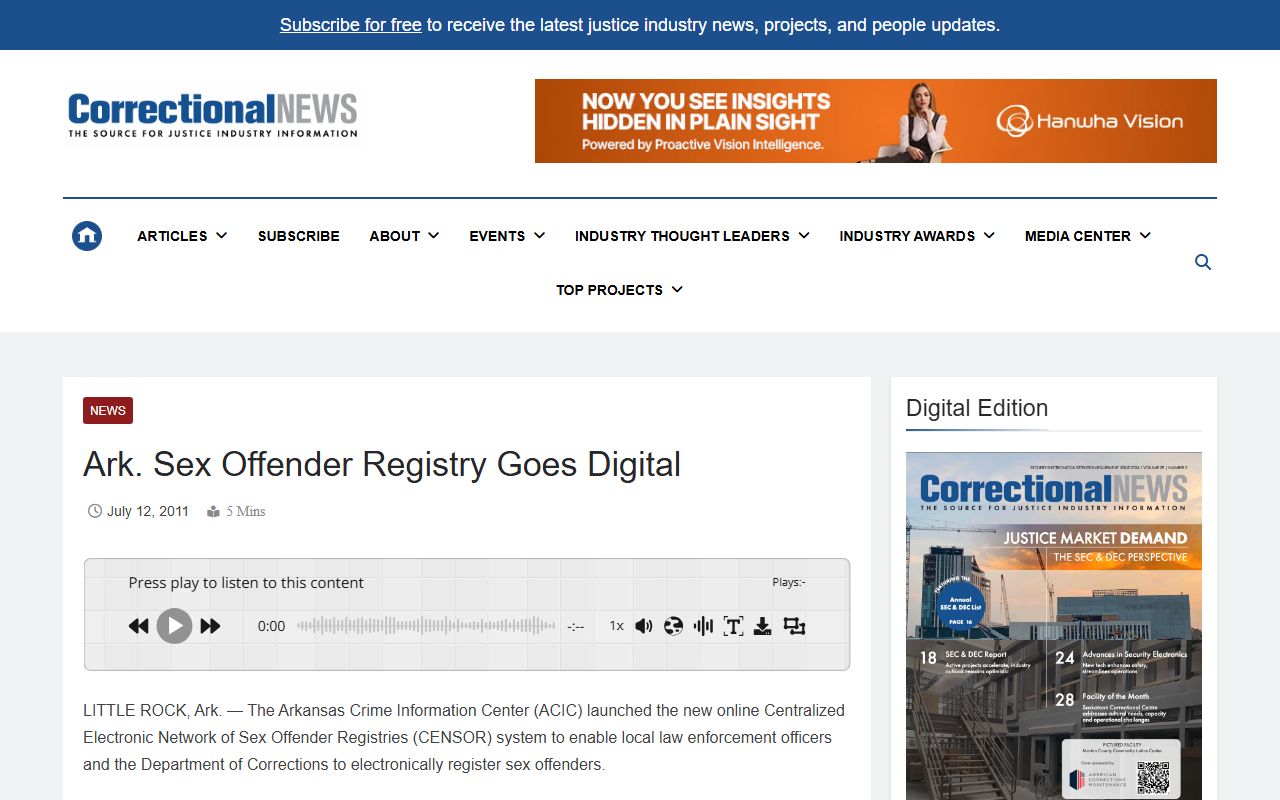
Arkansas runs sex offender registration through a digital platform called CENSOR, which stands for Centralized Electronic Network of Sex Offender Registries. ACIC launched CENSOR to allow local law enforcement and the Department of Corrections to register sex offenders electronically without paper forms. The system generates all required documents automatically and lets officers submit everything online. Before CENSOR launched, registration required paper forms faxed or mailed to ACIC.
At every visit, an officer enters demographic data and captures a new photo via web camera. That photo goes directly to the public registry. The system also saves about $55,000 per year by eliminating the certified mail notices that ACIC used to send every six months.
Each time a registered sex offender returns for a verification check, their current photo is shown on screen and a new one is taken. This keeps the images on the public registry current. Officers can also update any changed information in real time and run compliance reports on demand. The 2022 improvements by Mainstream Technologies expanded these capabilities further.
The registration process under CENSOR still requires offenders to bring specific documents and meet strict timelines set by state law. Missing a step in the process can lead to felony charges separate from the original sex offense conviction.
Note: ACIC registry contact: (501) 682-2222, One Capitol Mall Room 4D-200, Little Rock. SOSRA contact: (870) 850-8429. Public search: ark.org/offender-search.
Browse Arkansas Sex Offenders by County
Each of Arkansas's 75 counties handles sex offender registration through the local sheriff's office. Pick a county below to find registration resources, contact information, and local information for that area.
Find Sex Offenders in Arkansas Cities
Major Arkansas cities process registrations through the county sheriff or city police. Pick a city below for local registration resources and search tools for that area.