
Find Sex Offenders in Clark County
Clark County sex offender records are maintained through the Arkansas Crime Information Center and the Clark County Sheriff's Office in Arkadelphia. The ACIC public registry lists all Level 3 and Level 4 registered sex offenders in Clark County by name, photo, and current address. Anyone can search this database free of charge at ark.org/offender-search. This page explains how the Clark County sex offender registration process works, who the Sheriff's Office serves, what rules apply under Arkansas law, and how to look up registrant information for this Southwest Arkansas county.
Clark County Sex Offenders Overview
Clark County Sex Offender Search
The state registry for Clark County sex offenders is available online through ACIC at ark.org/offender-search. Search by first name, last name, city, county, or zip code. To see all Clark County registrants, select Clark County from the county filter in the search tool. Each result includes a current photo, home address, offense history, and vehicle information.
Only Level 3 and Level 4 sex offenders appear on the public website. Level 1 and Level 2 offenders are not shown to the general public, though law enforcement has full access to all risk tiers. If someone doesn't appear in a Clark County search, they may be registered at a lower level, may have moved, or may no longer be required to register.
The Clark County government site at clarkcountyarkansas.com provides county resources and contact information for local law enforcement. That's a good starting point if you need to contact the Sheriff's Office directly about a registration question.
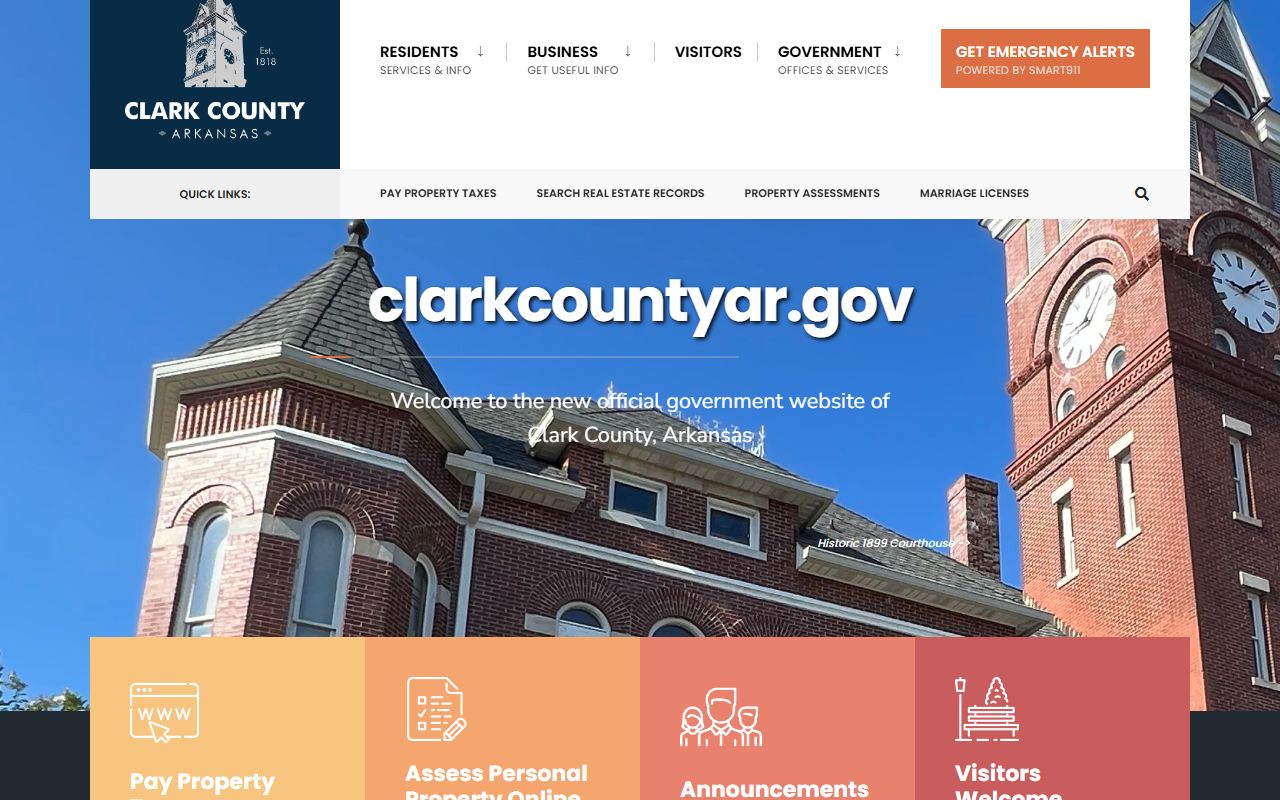
The Clark County website connects residents to local services, including the Sheriff's Office, which handles all sex offender registration appointments in the county.
Clark County Sheriff's Office Registration
The Clark County Sheriff's Office in Arkadelphia handles all sex offender registration for the county. Offenders who establish residency in Clark County must register within three business days. That deadline starts from the moment you set up a residence, not from the date you move most of your belongings. The law does not add extra time for weekends or delays in finding the office.
At the registration appointment, the Sheriff's Office collects a full set of information: full name and aliases, date of birth, Social Security number, driver's license number, home address, employer or school details, vehicle make and model, and all online usernames and email accounts. A photo is taken on the spot and uploaded directly to the ACIC registry through the CENSOR system. Fingerprints and a DNA sample are taken at initial registration.
The Clark County Sheriff's Office information page has contact details and office hours. Call ahead before your registration appointment to confirm the time. Walk-ins may face delays depending on the day.
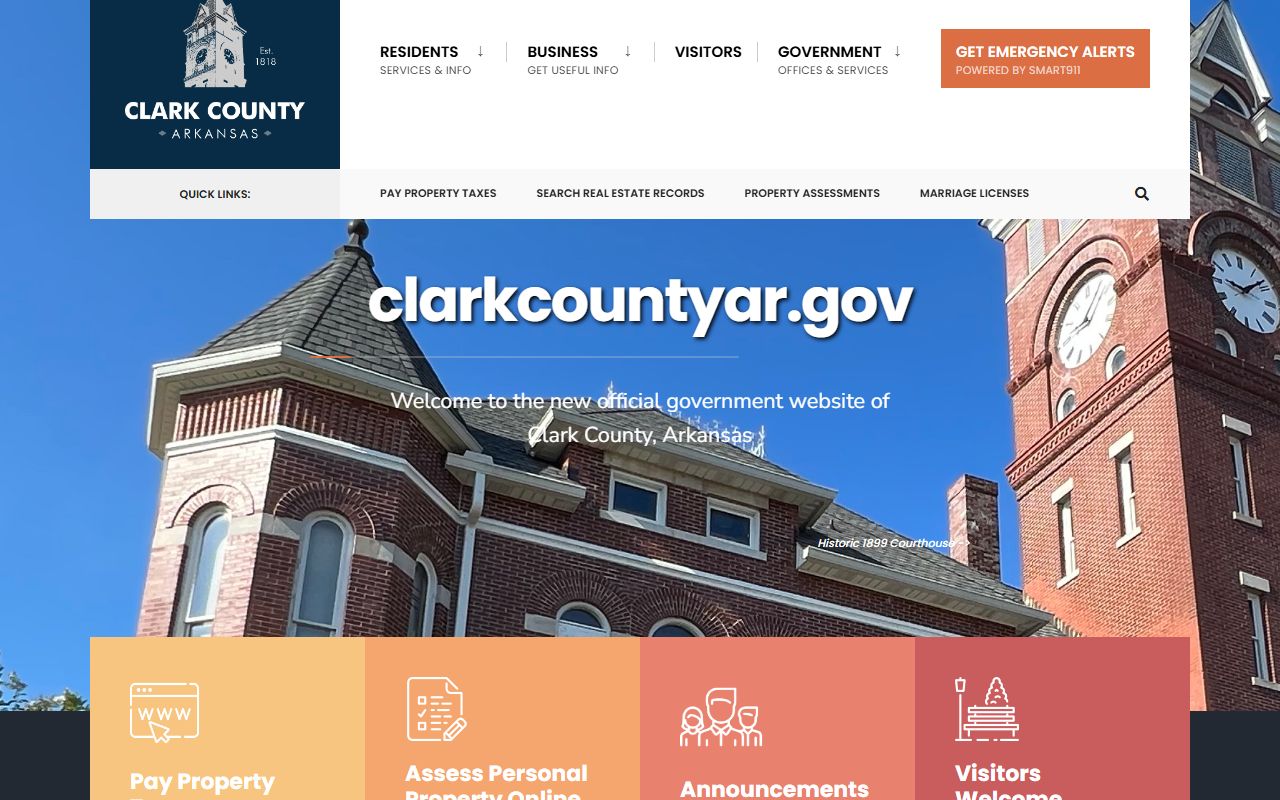
The Sheriff's Office also conducts compliance checks on registered sex offenders in Clark County to verify current addresses and confirm registrants are meeting their check-in obligations.
Risk Levels for Clark County Sex Offenders
The Sex Offender Screening and Risk Assessment unit, SOSRA, assigns one of four risk levels to every registered sex offender in Clark County. SOSRA is at 2403 E. Harding Ave. in Pine Bluff, phone (870) 850-8429. The level assigned controls how often the person must check in and how much the community is notified.
The community notification regulations under Arkansas's implementation of Megan's Law define all four levels. Level 1 (low risk) offenders typically have no prior sex offense history. Their information stays off the public website. Level 2 (moderate risk) offenders have a limited history. Law enforcement has discretion about notifying schools. Level 3 (high risk) offenders have repeat histories or strong predatory traits. Community notification for Level 3 includes door-to-door contact with neighbors and direct outreach to local schools. Level 4 (sexually violent predator) carries the most aggressive notification, including media alerts and community meetings.
Any Clark County offender who skips or refuses the SOSRA interview is automatically assigned Level 3 or referred for Level 4 review. Avoiding the assessment doesn't protect you. It typically makes things worse.
Arkansas Sex Offender Law and Clark County
The Arkansas Sex Offender Registration Act, codified at Ark. Code Ann. § 12-12-901 et seq., governs everything the Clark County Sheriff's Office does when registering a sex offender. The law lists the target offenses that require registration, including rape under § 5-14-103, sexual assault in first through fourth degree, sexual indecency with a child, computer child pornography, and internet stalking of a child. All of these trigger a registration requirement in Clark County.
Out-of-state offenders who move to Clark County must register the same as anyone else. If you're from a state that required registration, you must register in Clark County within three business days of arriving. A detailed Arkansas registration guide explains what out-of-state offenders need to bring and how to coordinate with the local sheriff's office before showing up.
Nonresident workers and students are covered too. Working or going to school in Clark County for more than fourteen consecutive days or thirty total days in a year requires registration with the Clark County Sheriff's Office. Residency doesn't matter. Being physically present for work or school triggers the rule.
Note: Clark County sex offenders must report any change of address to the Sheriff's Office and to ACIC at least ten days before the move takes place.
Verification Schedule and Non-Compliance Penalties
Clark County sex offenders must appear in person at the Sheriff's Office on a set schedule. Level 1, 2, and 3 offenders check in every six months. Level 4 offenders check in every three months. These visits confirm that the registrant still lives at the address on file and that all other information is current. Officers take a new photo at every visit.
Failing to register, skipping a verification appointment, moving without ten days' notice, or giving false information are all Class C felonies. Each violation carries three to ten years in prison and a fine up to $10,000. Three separate convictions for failure to register result in lifetime registration with no option to petition off the list.
The Arkansas Administrative Code outlines what officers document at each verification visit under the CENSOR system, including updates to employment, vehicle information, online accounts, and residential status.
Level 3 and Level 4 sex offenders in Clark County are also subject to a 2,000-foot residency restriction. They cannot live within 2,000 feet of any public or private elementary or secondary school or daycare facility. The Eighth Circuit upheld this restriction in Weems v. Little Rock Police Department, finding it did not violate any fundamental constitutional right. Violating it is a Class D felony.
Petition to Remove from the Clark County Sex Offender Registry
Some Clark County sex offenders are eligible to petition for removal from the registry. Under Ark. Code Ann. § 12-12-919, the petition can be filed fifteen years after release from prison or the start of parole, post-release supervision, or probation. The court must find that no additional sex offense has occurred during that period and that the person does not pose a risk to safety.
Before the hearing, copies of the petition must be served on the prosecuting attorney, the ACIC Sex Offender Registry, and Community Notification Assessment at least thirty days in advance. Victims who signed up for VINE notifications are alerted and may appear. If the court denies the petition, the offender waits three more years to try again. Sexually violent predators and repeat offenders often face lifetime registration with no available petition path.
Note: ACIC Sex Offender Registry contact: One Capitol Mall, Room 4D-200, Little Rock, AR 72201, phone (501) 682-2222. Public search: ark.org/offender-search.
Nearby Counties
Clark County is part of Southwest Arkansas. Neighboring counties all use the same ACIC registry and require registration with local sheriff's offices.